
The Dental Insurance Trap Nobody Warned Me About
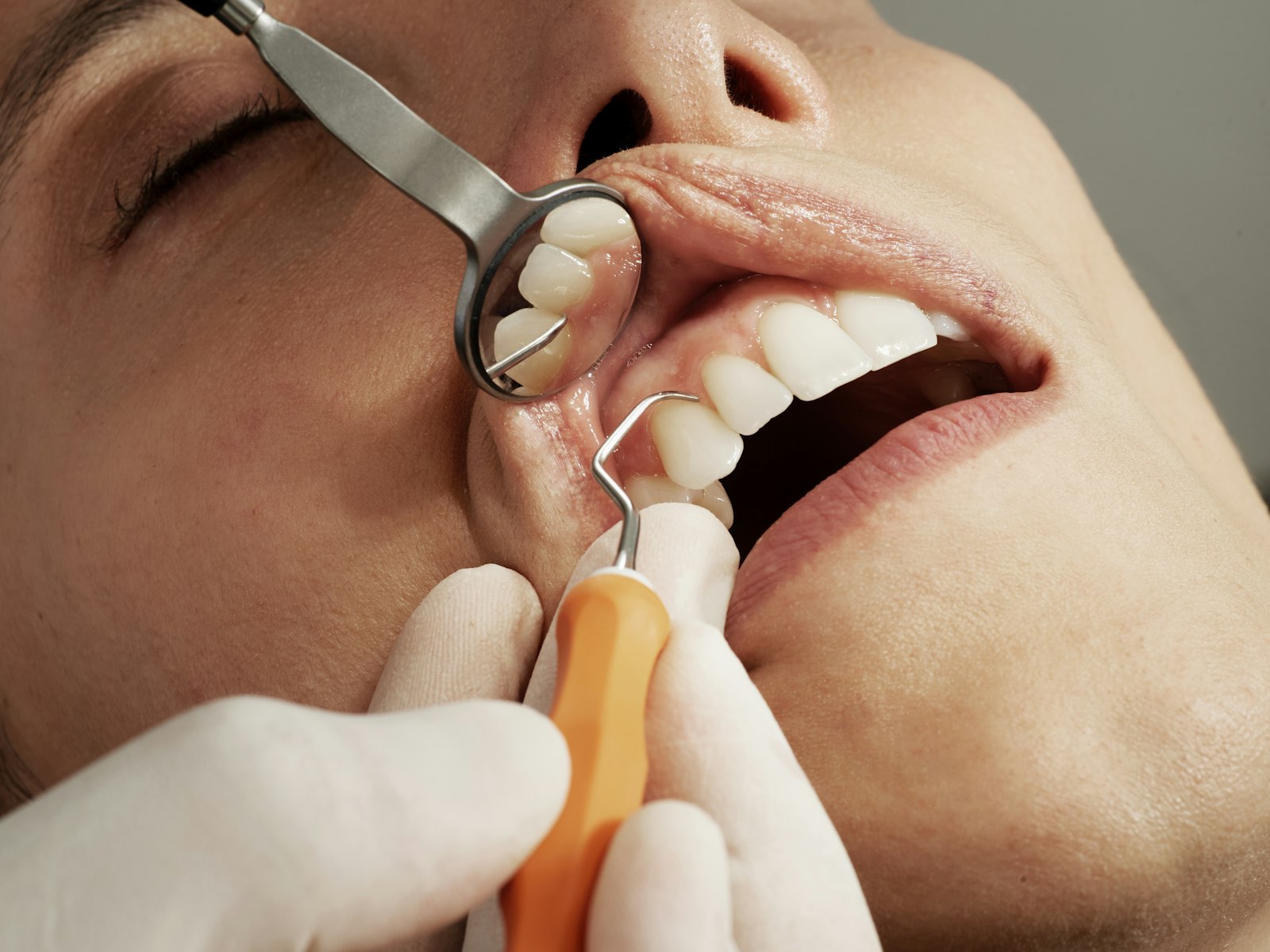
For four years between 2019 and 2023, I paid $34 a month for dental insurance through my school district's benefits package. It was the standard offering, the one most teachers in the district had, and I had checked the box during open enrollment without really thinking about it.
In 2023, after a routine cleaning, my dental hygienist mentioned that the plan I had was, in her professional opinion, "barely worth the premium" for someone who didn't have ongoing issues. I went home that night, looked up the plan documents, and did the math on what I had actually paid in versus what I had received back.
What I found was deeply embarrassing. Across four years, I had paid $1,632 in premiums and received roughly $880 in benefits, based on what the same procedures would have cost without insurance. Net loss: about $750 over four years.
When I dug deeper into how dental insurance actually works, I realized this isn't a personal failure on my part. The mismatch between premiums and benefits on most dental plans is structural, and almost nobody talks about it in mainstream personal finance content.
I want to walk through what's actually happening with dental insurance, because I suspect a meaningful percentage of people reading this are paying for plans that don't make financial sense for them.

How Dental Insurance Is Different From Medical Insurance
Most people think about dental insurance the way they think about medical insurance — protection against expensive procedures, with smaller everyday costs covered as part of the deal. This mental model is, in fact, completely wrong for how dental insurance actually works.
Medical insurance has a high deductible and an out-of-pocket maximum. After you've paid your deductible, the insurance covers most of your costs. After you've hit the out-of-pocket maximum, the insurance covers all of your costs. The structure is genuinely designed to protect you against catastrophic medical bills.
Dental insurance is the opposite. Most dental plans have a low or zero deductible, but they have an annual maximum benefit — a cap on how much the insurance will pay out in a single year. Common maximums range from $1,000 to $2,500 a year.
This means dental insurance is essentially a discount card for routine care, plus a tiny amount of protection against major procedures. If you need a $4,000 implant, the insurance covers maybe $1,500 of it, and you pay the rest. The catastrophic protection that medical insurance provides simply doesn't exist for dental.
The Math on Routine Care
Let me walk through how this works for someone with no dental issues other than routine cleanings, which describes most healthy adults.
A typical dental cleaning, twice a year, costs about $150 per visit out of pocket — so $300 a year. Add an annual set of X-rays at about $90. Total annual cost without insurance: roughly $390.

With dental insurance, those routine procedures are typically covered at 100% with no deductible. So your "savings" from insurance is $390 a year — the cost of the cleanings.
But your premium is $34 a month, or $408 a year.
You're paying $408 in premiums to save $390 in cleaning costs. You're net negative by $18 a year, before any other procedures.
This is the trap. The marketing of dental insurance emphasizes that the cleanings are "free" — covered 100%. The cleanings are not free. You're paying more for them through premiums than you would pay by just buying them directly.
The Math on Bigger Procedures
The case for dental insurance gets slightly better if you need more than just cleanings, but not by as much as you'd think.
Most dental plans use a sliding coverage structure: 100% on preventive (cleanings, X-rays), 80% on basic (fillings, simple extractions), and 50% on major (crowns, root canals, bridges). Plus that annual maximum, usually around $1,500.
Suppose you need a single filling in a given year, on top of your two cleanings. The filling costs about $200 without insurance, $40 with the 80% coverage. Total annual covered care: $390 cleanings + $200 filling = $590, of which insurance pays $550, you pay $40.
Compare to paying out of pocket: $590 total. Compare to insurance: $408 premium + $40 copay = $448 total.
The insurance scenario saves you $142 in that particular year. That's a real benefit. But over multiple years, you only come out ahead if you have at least one significant procedure most years. For someone with healthy teeth who has fillings rarely or never, the cleanings-only math still loses to paying out of pocket.
The Major Procedure Scenario
Now consider the scenario where dental insurance is supposed to really pay off: a major procedure. Say you need a crown, which costs about $1,400 out of pocket.
The plan covers 50% of major procedures, up to the annual maximum. So insurance pays $700, you pay $700.
Add your cleanings ($390 covered) and the crown ($700 insurance payment) and you've used $1,090 of your $1,500 annual maximum.
Compare to paying out of pocket: $390 cleanings + $1,400 crown = $1,790. With insurance: $408 premium + $0 cleaning copay + $700 crown copay = $1,108. You save $682 in this scenario.
That's meaningful. But here's the catch — these scenarios don't happen every year. They happen occasionally, and you pay premiums every year regardless.
The Lifetime Math
To understand whether dental insurance is worth it for your situation, you have to think about it on a multi-year basis.
Let me sketch out two realistic scenarios for someone in their thirties or forties with average dental health.
Scenario A: Insurance, ten years. - Premium: $408/year × 10 years = $4,080 - Plus copays for all procedures - Estimated total spend: $4,080 in premiums + roughly $800 in copays across the decade = $4,880
Scenario B: No insurance, ten years. - Cleanings: $390/year × 10 = $3,900 - Plus full cost of any procedures needed - For someone with average dental health (say, three small fillings and one crown across the decade): $600 + $1,400 = $2,000 in additional procedures - Estimated total spend: $3,900 + $2,000 = $5,900
In this scenario, insurance saves you about $1,020 over ten years. Not nothing, but also not a slam-dunk argument for the premium.
Now consider someone with truly excellent dental health who only needs cleanings:
Scenario A: Insurance, ten years: $4,080 in premiums Scenario B: No insurance, ten years: $3,900 in cleanings
Insurance costs you $180 more over the decade. This is the scenario the dental industry doesn't want you running the numbers on.
And consider someone with chronic dental issues:
Scenario A: Insurance with $1,500 annual max, ten years: $4,080 premiums + many years of copays + many years of expenses above the annual maximum. Scenario B: No insurance: substantial costs but no premium drag.
For people with serious ongoing dental needs, the annual maximum makes most dental insurance plans surprisingly inadequate. You hit the cap quickly and then pay full price for everything else.
What I Did Instead
After running these numbers, I dropped my dental insurance during the next open enrollment period. I now pay for cleanings out of pocket — my dentist offers a "no insurance" rate of $135 per cleaning, slightly less than the $150 standard rate. Two cleanings a year is $270.
I also opened a Health Savings Account (HSA) through my school's high-deductible health plan, which lets me set aside pre-tax money for medical expenses. Dental work counts. So my $270 in annual cleanings effectively costs me about $200 after the tax savings.
I've now been doing this for two years. In that time I've needed one filling ($180 out of pocket) and the routine cleanings. Total dental spend across two years: roughly $720. The equivalent insurance plan would have cost me $816 in premiums alone, plus copays.
I am also setting aside a small amount each month — about $40 — to a dedicated dental savings sub-account. This builds up a buffer for the eventual crown or root canal that statistically I'll need at some point. If and when that happens, I'll pay it out of the savings rather than relying on insurance with its $1,500 annual cap.
Who Dental Insurance Does Make Sense For
I want to be balanced here. Dental insurance is not a universal scam. There are situations where it genuinely makes financial sense.
Children with developing teeth. Kids often need more dental work than adults — sealants, orthodontics evaluations, the occasional cavity that comes with new teeth coming in. Family plans, especially those that cover children at full or near-full benefit, often pay off.
People with known chronic dental issues. If you have a history of needing multiple fillings or other procedures every year, the math swings in favor of insurance because you're a high utilizer.
Employer-subsidized plans where you pay only a small portion of the premium. If your employer pays most of the premium and you pay $8/month, the math is dramatically different than paying the full $34. The break-even for employee-paid premium is much lower than for fully-paid.
People who would otherwise skip preventive care. This is the underrated argument. Some people are more likely to actually get cleanings if they're "free" through insurance, even if the premiums are more than the cleanings would cost. The behavioral nudge has real value if it changes what you actually do.
What I'd Tell You
Run the numbers on your own dental insurance for the past two or three years. Compare what you paid in premiums to what the insurance covered, valued at out-of-pocket prices.
If insurance has been net-positive for you, keep it. If it's been net-negative — and for most healthy adults without children, it has been — consider dropping it during your next open enrollment.
If you do drop it, replace it with two things: a fund specifically set aside for dental care (an HSA if available, or just a dedicated savings sub-account), and a commitment to keep going to your cleanings even though they're not "free" anymore. Skipping preventive care to save money is the worst possible move — small problems become big problems if you don't catch them early.
The dental industry has done an excellent job convincing Americans that dental insurance is something you should have by default. The math, on examination, suggests it's actually a relatively bad deal for most healthy adults. Knowing this doesn't change anything dramatic about your life — but over a decade, it might save you a thousand dollars or more, redirected to something more useful.

Written by
Sarah Chen
Sarah paid off $52,000 in student loans, reached financial independence at 41, and now writes about the real-world money decisions that actually move the needle. She's based in Portland, Oregon and still tracks every dollar.
More about SarahYou Might Also Like

I Kept $18,000 in a Regular Savings Account for Three Years. Here's What That Cost Me.
My bank's savings account paid 0.01% APY. I had $18,000 sitting in it for three years. When I finally did the math on what I'd lost, it was embarrassing enough to motivate me to switch the same afternoon.

A 50-Point Credit Score Gap Cost Me $9,000 on My Mortgage
I thought my credit was fine until a lender showed me the real rate. The 50 points I'd ignored had quietly added $9,000 to my 30-year mortgage. Here's why.

How I Got Off the Amazon Habit — A Real Story With Real Numbers
I had 47 Amazon orders in a single year, totaling $1,840, and could not remember more than a third of what I had bought. The fix took me one weekend and saved me about $900 a year. Here's exactly what worked.