
The Three-Fund Portfolio Explained for People Who Don't Want to Think About It
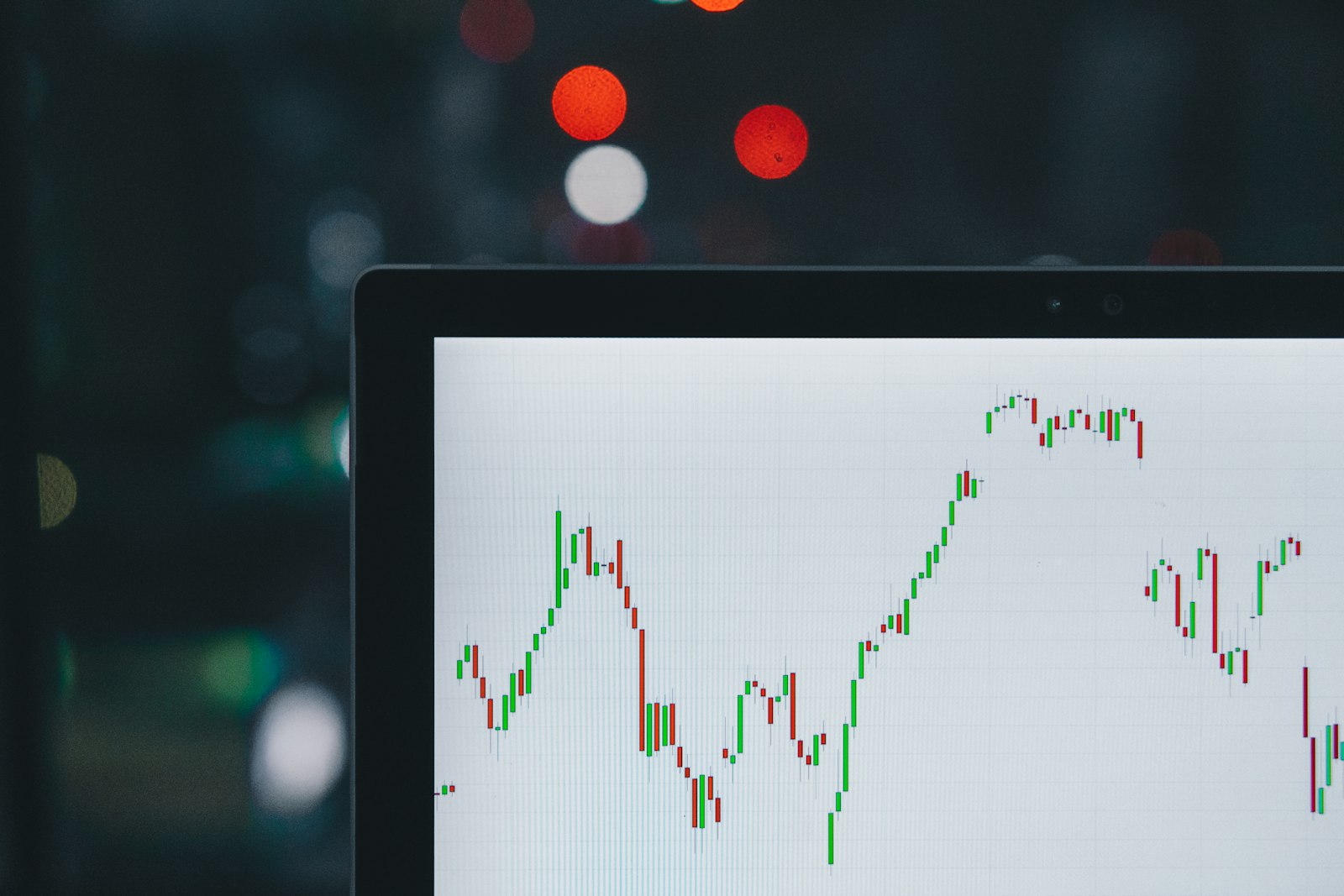
The first time I heard the phrase "three-fund portfolio" was in 2020, on a personal finance forum. Someone in the comments said "just do a three-fund portfolio and forget about it." Five other commenters agreed. Nobody explained what one was.
I spent the next hour reading explanations and felt approximately as confused at the end as I had at the beginning. Most of them were written for people who already knew what an ETF was, what asset allocation meant, and why "international exposure" was a thing you might want.
I want to write the explanation I wish I had read. Plain language, no assumed knowledge, and the actual setup steps for the most common brokerages. By the end of this you should know what a three-fund portfolio is, why people recommend it, and how to set one up if you decide to.
What a Three-Fund Portfolio Is
A three-fund portfolio is exactly what it sounds like: an investment account that holds three index funds, in some chosen percentage, and nothing else.
The three funds, in plain terms, are:
- A fund that owns most of the U.S. stock market.
- A fund that owns most of the rest of the world's stock market.
- A fund that owns U.S. government bonds.
That's the whole portfolio. You decide what percentage to put in each one. You buy them. You add money to them periodically. You don't change anything else.

The reason this is recommended so widely is that it gives you exposure to almost every major asset class — U.S. stocks, foreign stocks, U.S. bonds — at extraordinarily low cost, with no decisions to maintain after setup.
Why Three Funds and Not Just One
A reasonable question at this point is: why not just put everything in one broad-market fund and call it done?
You can do that. It's a perfectly defensible approach. The single-fund version, sometimes called a "one-fund portfolio," works fine for most early-career investors. I personally hold a one-fund portfolio in my Roth IRA and have for years.
The three-fund approach adds two things to the one-fund approach:
International diversification. A U.S.-only fund holds U.S. companies. A three-fund portfolio also holds companies based in Europe, Japan, China, India, Brazil, and dozens of other countries. The historical performance of the U.S. market has been excellent, but there's no fundamental reason it has to keep being the best market forever. International exposure protects against the scenario where U.S. stocks have a disappointing decade while foreign markets do well.
Bond allocation. Stocks go up over time but they go down sometimes too — sometimes a lot, sometimes for years. Bonds tend to be more stable, and they sometimes go up when stocks go down. Holding some bonds in your portfolio reduces how much it loses when the stock market crashes, at the cost of slightly lower expected long-term returns.
For someone in their twenties or early thirties with decades to go before retirement, the bond allocation is often kept small or even zero. For someone in their fifties, the bond allocation grows. The three-fund structure gives you the flexibility to dial this in based on your situation.
The Specific Funds to Use
This is the part where most articles get vague, so I'll be specific.
The three funds you want depend slightly on which brokerage you use, but the choices are roughly equivalent across all of them. Here are the most common combinations.
At Vanguard: - VTI — Vanguard Total Stock Market ETF - VXUS — Vanguard Total International Stock ETF - BND — Vanguard Total Bond Market ETF
At Fidelity: - FZROX — Fidelity ZERO Total Market Index Fund (zero expense ratio) - FZILX — Fidelity ZERO International Index Fund - FXNAX — Fidelity U.S. Bond Index Fund
At Charles Schwab: - SCHB — Schwab U.S. Broad Market ETF - SCHF — Schwab International Equity ETF - SCHZ — Schwab U.S. Aggregate Bond ETF
All three brokerages will accept any of the others' funds, so you can mix and match if you really want to. In practice, using your brokerage's own funds is the cleanest setup because there are no transaction fees and the rebalancing tools work better.
The Allocation Question
Once you've picked your three funds, you have to decide what percentage of your portfolio goes into each one. This is the only meaningful decision in the whole system.
The most common starting point is what's called a "Bogleheads-style" allocation, named after the followers of Vanguard founder John Bogle. A typical version looks like this:
- 60% U.S. stocks
- 30% international stocks
- 10% U.S. bonds
For a younger investor, you might tilt more toward stocks (and fewer bonds). For an older investor, you might do the opposite.
A common shorthand is "your age in bonds" — meaning if you're 30, hold 30% bonds. This is generally considered too conservative by most modern advisors, but it's a useful upper bound. A more current version is "your age minus 20 in bonds" — so a 30-year-old would hold 10% bonds. A 50-year-old would hold 30%. A 65-year-old would hold 45%.
These are starting points, not commandments. Your specific situation might warrant something different. But they're reasonable defaults if you have no strong opinion of your own.
How to Set It Up
The setup process is roughly the same at every major brokerage. Here are the steps:
Step one: Open the account. If you don't already have a brokerage or retirement account, open one. For most people starting out, a Roth IRA is the right first account because of the tax advantages. The application takes 10-15 minutes online and requires basic personal information plus your Social Security Number.
Step two: Fund the account. Link your bank account and transfer money in. The minimum to open is usually $0 and the minimum to start investing is usually $1 (since most brokerages now allow fractional shares).
Step three: Buy the three funds. Place a buy order for each of the three funds, in the amounts that match your chosen allocation. If you have $1,000 to invest and you've chosen 60/30/10, you'd buy $600 of the U.S. stock fund, $300 of the international fund, and $100 of the bond fund.
Step four: Set up automatic contributions and automatic investing. This is the most important step and the one most people skip. Set up a recurring monthly transfer from your bank to the brokerage. Then go into the brokerage's settings and turn on "automatic investing" — this tells the brokerage to use any new money to buy the funds in your chosen ratio without you having to log in and place trades manually.
If you skip the automatic investing step, your contributions will sit in cash forever. I've written about this mistake before and it cost me $14,000 in compounded returns.
What Happens Year to Year
In a normal year, you do nothing. You contribute money each month. The brokerage automatically buys the three funds. The market does whatever the market does.
The only real maintenance is something called rebalancing. Over time, as the funds perform differently, your allocation will drift. Maybe U.S. stocks have a great year and your 60/30/10 portfolio is now actually 65/27/8. Once a year — most people pick a date like January 1st or their birthday — you log in and either sell some of the over-allocated fund and buy the under-allocated funds, or simply direct your future contributions disproportionately toward the under-allocated funds.
This whole process takes about ten minutes a year. You don't have to time the market. You don't have to read financial news. You don't have to make predictions about anything. You just bring the percentages back to your target.
The Common Objections
I want to address two objections I see people raise about the three-fund portfolio, because both have grains of truth.
"It's too boring." Yes. That's the point. Boring strategies that you actually stick with for thirty years vastly outperform exciting strategies that produce great stories at parties. The "boredom" of index investing is the feature that makes it work, because it removes the emotional decisions that wreck most retail investors.
"International stocks have underperformed for years." This is true over the past decade. International stocks have, indeed, lagged the U.S. market significantly during the post-2010 bull run. The argument for holding them anyway is that no one knows whether the next decade will look like the last one. Diversification is insurance against the scenario you didn't predict, not a guarantee that you'll match the best-performing single market.
If you have a strong view that U.S. stocks will continue to outperform forever, you can choose to skip the international fund and run a "two-fund portfolio" of U.S. stocks plus bonds. That's a defensible choice. It's also a choice that depends on a prediction.
What I'd Tell You
The three-fund portfolio is, in my opinion, the right answer for about 95% of people who are trying to invest seriously and don't want to spend their lives thinking about it. It's diversified. It's cheap. It requires almost no maintenance. It will, over a thirty-year horizon, almost certainly produce returns within rounding distance of the global stock and bond markets.
It will not make you rich quickly. It will not let you brag about your stock picks. It will not produce a story that goes viral on Reddit. What it will do is reliably accumulate wealth in the background while you live your actual life.
That trade — the absence of excitement in exchange for reliable, low-effort, broadly-diversified growth — is, in my view, the trade serious investors eventually make. The earlier you make it, the longer compound interest has to work for you.
Twenty minutes to set up. Ten minutes a year to maintain. The math takes care of the rest.

Written by
Sarah Chen
Sarah paid off $52,000 in student loans, reached financial independence at 41, and now writes about the real-world money decisions that actually move the needle. She's based in Portland, Oregon and still tracks every dollar.
More about SarahYou Might Also Like
The First $100,000 Is the Hardest. Here's Why the Math Actually Proves It.
Charlie Munger said the first $100,000 is a bitch. He was right, and the reason is mathematical, not motivational. Here's what actually makes the early years hard, what changes once you cross the line, and how long it realistically takes at different savings rates.

I Started Saving for Retirement at 41. Here's What the Math Actually Shows
I had $89,000 saved for retirement at 41 — well behind every benchmark. Instead of spiraling, I ran the forward-looking numbers. What I found was more useful than the guilt.

We Opened a 529 for Our Daughter — and I Picked the Wrong One First
Tuition could triple before my daughter turns 18, so I opened a 529 in a panic and picked the wrong kind first. Here's what I'd tell my earlier self today.