
Why I Don't Pick Stocks Anymore — And the $7,200 Lesson That Got Me There
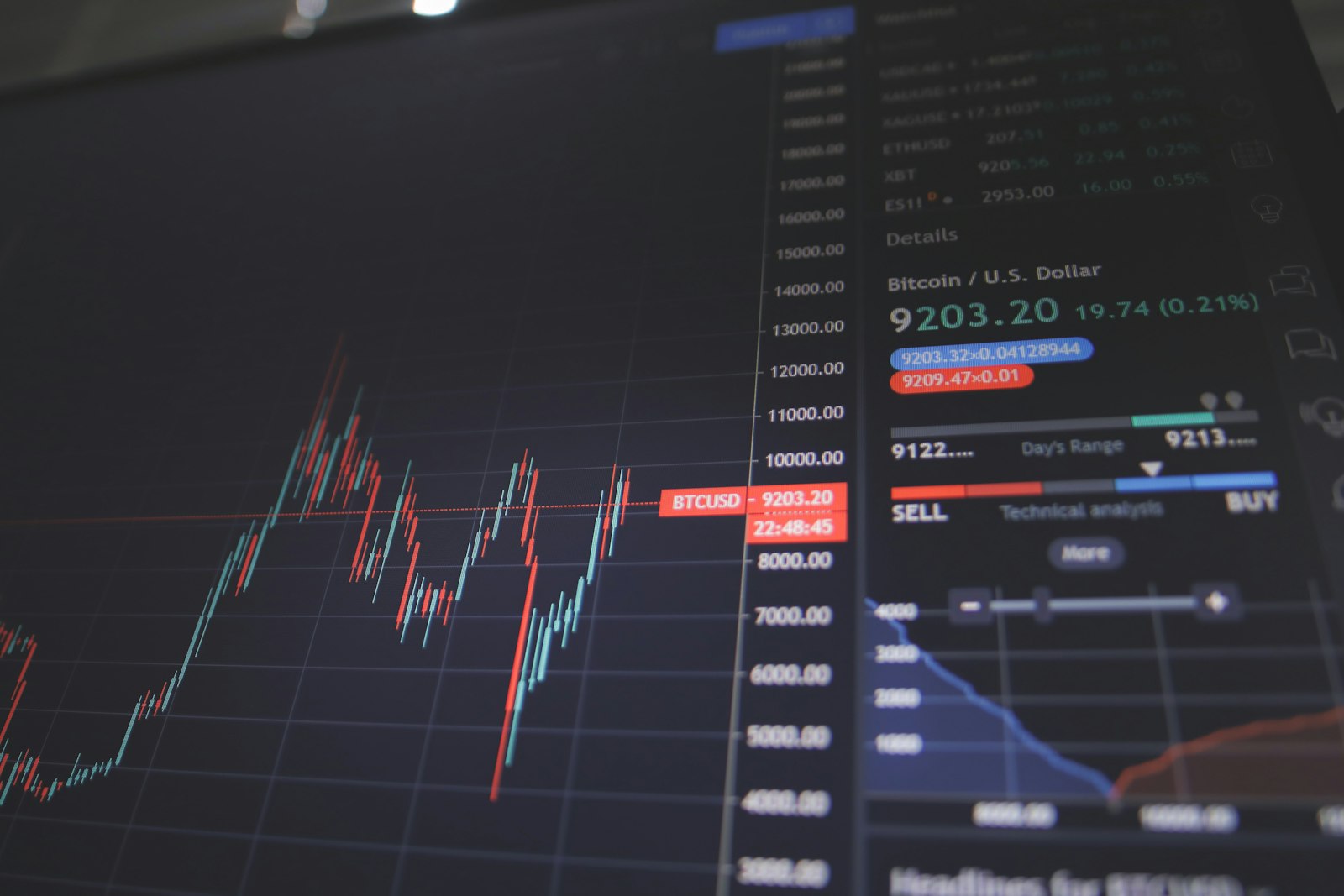
For two years, between roughly 2020 and 2022, I thought I had figured something out about investing.
The pandemic had hit. The market was, depending on the week, either crashing or rocketing. I was bored at home in the evenings. I started reading 10-Ks. I joined a Discord server full of other people doing the same thing. I built spreadsheets to compare valuations across companies in the same sector. I felt like I was doing real research.
I made what felt like rigorous, well-informed bets. Some of them worked. A small position in a software company I had researched for weeks went up 40% in three months. I felt brilliant. A bet on a clothing retailer I thought was undervalued went up 28%. Brilliant again.
By the end of 2022 I had been picking individual stocks for about 28 months and my brokerage account showed a balance that was approximately $7,200 lower than what it would have been if I had just bought the S&P 500 index for the same amount of money over the same period.
This number was not subjective. It was not a feeling. It was the result of comparing two columns in a spreadsheet — what I had actually done versus what the lazy default would have done. The lazy default had won by $7,200, and that was after only counting the brokerage account. If I added the time I had spent on research, the comparison was much worse.
I want to walk through what I learned, because the conclusion I came to is one that almost every serious academic study agrees with, and yet almost everyone has to learn it through their own version of the same painful process.

What I Thought I Was Doing
The mental model I had during my stock-picking phase was reasonable on its face. The stock market is full of inefficiencies. Most participants don't read 10-Ks. If I read more than the average participant and thought more carefully than the average participant, surely I would, on average, do better than the average participant.
This argument is not crazy. It also turns out to be wrong, for reasons that took me a while to fully understand.
The first reason is that the "average participant" is not who you're competing against. Most of the dollar volume in any individual stock is being traded by professionals — hedge funds, pension funds, mutual funds, market makers. These are people whose full-time job is researching the same companies you're researching, with better tools, more data, faster execution, and entire teams of analysts. The "average retail investor" is not setting the price. The professionals are.
The second reason is that even professionals, on average, do not beat the market. The S&P Indices Versus Active (SPIVA) report has tracked this for over twenty years. Over a fifteen-year period, roughly 88% of actively managed U.S. equity funds underperform the S&P 500. These are not amateurs. These are well-resourced professional fund managers, and the vast majority of them lose to the index.
If 88% of professionals lose, the chance that I — a teacher with a spreadsheet and some Discord friends — would beat them was, on a coldly mathematical basis, very low.
The Wins That Lied to Me
The reason I kept doing it for as long as I did is that I had wins. Real ones. The 40% software stock. The 28% retailer. A few smaller wins.
What I had not factored in correctly was the losses. The wins felt vivid because they were exciting and because I told friends about them. The losses were quieter — they happened slowly, often as positions I held too long while they bled value, or as exit decisions I delayed because I didn't want to admit I'd been wrong.
When I added them all up, the wins were about +$11,400. The losses were about -$13,200. The net was negative $1,800 on the picks themselves. Then there was the opportunity cost — the difference between what I had earned and what I would have earned in the index over the same period. That gap was the additional $5,400. Total cost: $7,200, plus the time.
This is, I'm told by people who study this kind of thing, an extremely common pattern. Active investors remember their wins clearly and their losses vaguely. The aggregate result is that they think they're doing better than they are, sometimes for years, until they actually run the numbers.
The 10-K Trap
I want to address one specific thing, because it's the trap I personally fell into hardest.
Reading a company's annual report — the 10-K — feels like serious research. You're reading the same document the analysts read. You're seeing the actual numbers, not just the news coverage. It feels like you're getting an edge.
The catch is that everyone who could conceivably trade on the information in that 10-K already has. The professional analysts have read it the moment it dropped, run their models, and adjusted their positions. By the time you're reading it on a Sunday afternoon, the price already reflects whatever the market thinks of the contents.
You are not doing research. You are doing book reports. The market has already graded the book.
This realization, more than any single losing trade, was what pushed me toward index funds. I had thought I was doing the work to deserve the returns. I was actually doing the work and getting the same returns I would have gotten by doing none of the work, minus the fees and the mistakes.
What I Do Now
For the past two and a half years, my entire investment strategy has been:
- Contribute $50 a week to a Roth IRA.
- The contributions automatically buy VTI (Vanguard's broad U.S. market ETF).
- I do not look at it.
That's it. I have not made an active investment decision in over two years.
In that period, my account balance has grown from approximately $11,000 to approximately $19,800. About $4,200 of that is contributions. About $4,600 is market growth. Net of any fees, my returns have been within rounding distance of the index, which is exactly what's supposed to happen.
I have spent perhaps twenty minutes total on this account in the past 24 months. By contrast, I spent something like 200 hours on stock research during my picking years, and the result was a worse outcome. The math on time-per-dollar-of-return is brutal.
The Counterargument I'd Make
I want to be fair to the people who do pick stocks and do well. They exist. There are individual investors who genuinely beat the market over long periods, sometimes spectacularly.
These investors tend to share several characteristics. They have an unusual amount of time to dedicate to research. They specialize in a narrow industry where they have genuine domain expertise. They are temperamentally suited to holding losing positions through long periods of doubt. They are emotionally able to make concentrated bets and not get spooked.
Almost none of these traits applied to me. I am a teacher with limited time, no specific industry expertise, average emotional tolerance for losing money, and a tendency to overthink positions until I miss the right exit. I was, by temperament and resource, exactly the wrong kind of person to be picking stocks.
If you genuinely have those traits — if you have the time, the expertise, the temperament — picking stocks might work for you. For most people, including me, it will not. And the only way to find out which group you're in is to spend a few years and a few thousand dollars discovering the answer the hard way.
What I'd Tell Someone Just Starting
If you're just starting to invest, do yourself the favor of starting with index funds and only deviating later, if ever. Here's the simplest possible path:
Open a Roth IRA at Fidelity, Schwab, or Vanguard. All three are fine. Avoid Robinhood for retirement accounts.
Set up an automatic monthly contribution. Whatever you can afford. $25 is fine to start. The number matters less than the consistency.
Buy a single broad-market index fund. VTI, VOO, FXAIX (Fidelity's S&P 500), or SCHB if you're at Schwab. Set the contributions to automatically buy this fund.
Don't look at it for a year.
This will be the most boring investment strategy you have ever heard of. It will, on average, outperform almost every more interesting strategy you might be tempted to try. The boredom is the feature, not a bug.
If, after a year or two of this, you still want to pick individual stocks, take a maximum of 5% of your portfolio and use it for that. Keep the other 95% in the index fund. This way, even if your stock picking is a disaster, the bulk of your retirement is protected by the boring strategy.
I wish someone had told me this in 2020. I'd be $7,200 ahead, plus 200 hours of my life back. But I had to learn it the way most people learn it, which is by doing the wrong thing for a couple of years and then looking honestly at the results.
The math isn't personal. It's just math. The earlier you accept it, the earlier compound interest starts working for you instead of against you.

Written by
Sarah Chen
Sarah paid off $52,000 in student loans, reached financial independence at 41, and now writes about the real-world money decisions that actually move the needle. She's based in Portland, Oregon and still tracks every dollar.
More about SarahYou Might Also Like
The First $100,000 Is the Hardest. Here's Why the Math Actually Proves It.
Charlie Munger said the first $100,000 is a bitch. He was right, and the reason is mathematical, not motivational. Here's what actually makes the early years hard, what changes once you cross the line, and how long it realistically takes at different savings rates.

I Started Saving for Retirement at 41. Here's What the Math Actually Shows
I had $89,000 saved for retirement at 41 — well behind every benchmark. Instead of spiraling, I ran the forward-looking numbers. What I found was more useful than the guilt.

We Opened a 529 for Our Daughter — and I Picked the Wrong One First
Tuition could triple before my daughter turns 18, so I opened a 529 in a panic and picked the wrong kind first. Here's what I'd tell my earlier self today.